
How to Preserve Muscle While Losing Weight
By Eddie Khoriaty, BPharm, R.Ph., C.Ph.
A Pharmacist's Guide to Protecting Your Strength, Metabolism, and Independence
For decades, most conversations about weight loss focused almost entirely on one number: the scale.
As a pharmacist, I have watched that mindset evolve. Today, we have remarkable tools, including GLP-1 medications, that are helping millions of people lose substantial amounts of weight and dramatically improve their metabolic health. That is genuinely exciting.
But there is a side of the story that does not receive nearly enough attention.
Not all weight loss is healthy weight loss.
If you are losing muscle along with fat, you may actually be accelerating certain aspects of aging while believing you are getting healthier. This is not just a concern for older adults; it affects anyone trying to lose weight quickly. My goal isn't simply to help people become lighter. It is to help them become stronger, healthier, and more resilient for decades to come.
A Personal Observation
Throughout my career as a pharmacist, I've seen people focus heavily on lab numbers, body weight, or medication doses while completely overlooking one of the most important predictors of long-term health: muscle mass.
Recently, I've watched friends, coworkers, and patients celebrate dramatic weight loss with GLP-1 medications. Many looked fantastic. But then, something unexpected happened.
They started telling me:
- "I feel weaker."
- "I get tired climbing stairs."
- "I don't have the strength I used to have."
- "I've lost weight, but I don't feel athletic anymore."
That immediately caught my attention. I realized that when weight loss happens too quickly without protecting muscle, a significant portion of the lost weight comes directly from lean body mass. That realization completely changed how I think about successful weight loss. Today, I believe preserving muscle should be just as important as losing fat.
Why Muscle Matters More Than You Think
Most people view muscle simply as something that helps us lift heavy objects. In reality, skeletal muscle is one of the body's largest and most vital metabolic organs.
Healthy muscle helps regulate:
- Blood sugar and insulin sensitivity
- Metabolic rate
- Balance and mobility
- Bone strength
- Immune function and recovery from illness
- Overall longevity
Researchers now recognize low muscle mass as an independent risk factor for disability, hospitalization, frailty, and premature death.1
The Bottom Line: Muscle isn't just about looking fit; it's about staying active, independent, and vibrant.

Weight Loss Isn't the Same as Fat Loss
Consider two people who each lose 30 pounds:
| Metric | Person A | Person B |
|---|---|---|
| Fat Loss | 28 lbs | 18 lbs |
| Muscle Loss | 2 lbs | 12 lbs |
| Scale Result | -30 lbs | -30 lbs |
The scale shows the exact same result, yet their long-term health outcomes are completely different. This is why body composition matters far more than body weight alone.
Understanding Sarcopenia
Sarcopenia is the progressive loss of muscle mass and strength that occurs naturally as we age.1 Beginning around age 30, adults gradually lose muscle mass every decade, and after age 60, this process often accelerates.1
Without proactive intervention, sarcopenia can lead to:
- Falls and fractures
- A sluggish metabolism
- Loss of physical independence
- Poor recovery after illness
- Reduced lifespan1
The good news? Sarcopenia is one of the most preventable aspects of aging.9,10,11
GLP-1 Medications: Powerful Tools That Require a Strategy
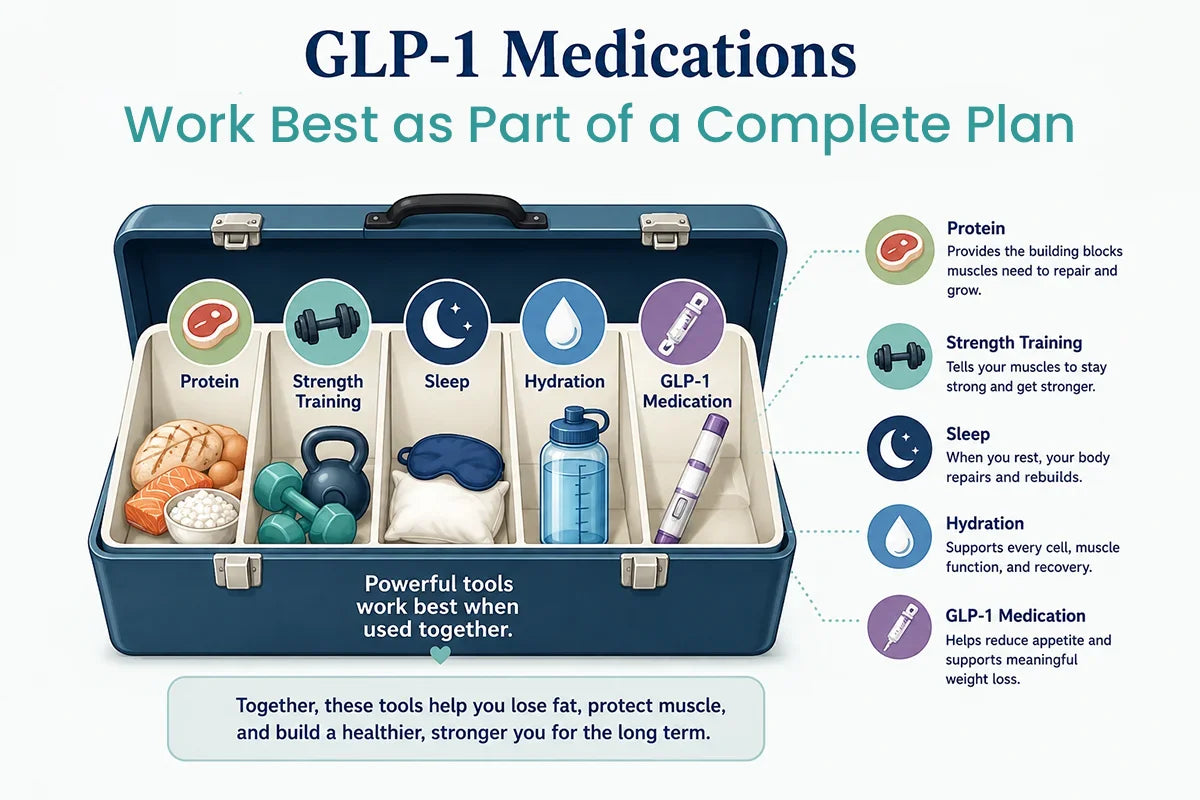
Medications such as semaglutide and tirzepatide have transformed obesity treatment.5,6 These therapies effectively reduce appetite, improve blood sugar, lower cardiovascular risk, and promote significant weight loss.5,6
While the scientific evidence supporting them is impressive, clinical trials show that approximately 25% to 40% of total weight lost can come from lean body mass if muscle preservation isn't prioritized from day one.5,6
This doesn't mean the medications are harmful. It simply means patients need a comprehensive strategy that pairs the medication with targeted nutrition and exercise.9,12 GLP-1 medications are powerful tools, and like any tool, they work best when used correctly.
 Protein: The Foundation of Muscle Preservation
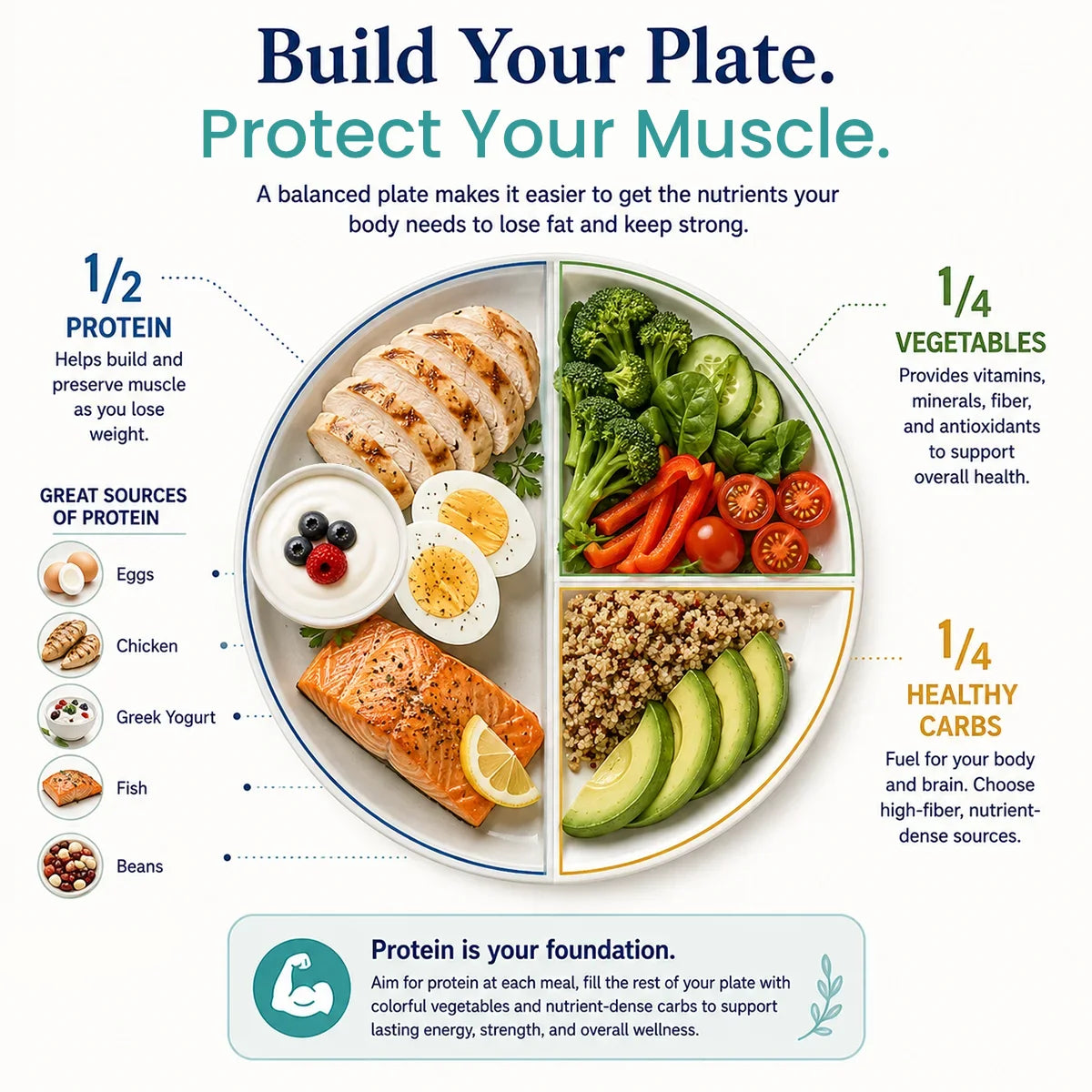
If I could recommend only one nutritional priority during weight loss, it would be adequate protein intake.3 Protein provides essential amino acids your body needs to repair and maintain muscle tissue.3,4 Older adults actually require more dietary protein than younger adults because muscles become less responsive to protein over time, a phenomenon known as anabolic resistance.4
Current research generally supports consuming roughly 1.2 to 1.6 grams of protein per kilogram of ideal body weight daily for older adults attempting to preserve muscle during weight loss.3,12
Excellent protein sources include:
- Fish and poultry
- Eggs, Greek yogurt, and cottage cheese
- Lean beef
- Whey protein
- Soy products and legumes
Rather than consuming most of your protein at dinner, distribute your intake evenly across meals to maximize muscle protein synthesis throughout the day.3
Resistance Training Is Non-Negotiable
Walking is wonderful for overall health, but walking alone cannot adequately protect muscle mass during significant weight loss.2,11 Resistance training provides the physical stimulus that tells your body: "Keep this muscle. I still need it."
You don't need to live in the gym or become a bodybuilder. Performing two to four sessions per week using any of the following can dramatically preserve your muscle mass:2,11
- Resistance bands
- Exercise machines
- Free weights
- Bodyweight exercises
Even adults in their 70s, 80s, and beyond can reliably build strength through progressive resistance exercise.9,11 You are never too old to get stronger.
Creatine: One of the Most Researched Supplements
Few dietary supplements have accumulated as much scientific evidence as creatine monohydrate.7,8 Despite common myths, research consistently demonstrates its safety and benefits for healthy adults.7,8
Studies suggest creatine helps:7,8
- Increase strength and power output
- Preserve lean muscle mass
- Enhance workout recovery
- Support healthy cognitive and physical aging when paired with resistance training7
For most healthy adults, 3 to 5 grams daily is optimal.8 As a pharmacist, I always advise discussing creatine with your healthcare provider first if you have underlying kidney conditions or other significant health concerns. Many people worry abut kidney health when considering creatine. Learn what the current research actually shows.
Magnesium: The Quiet Contributor
Magnesium doesn't always get the spotlight that protein or creatine receives, but it participates in hundreds of critical enzymatic reactions throughout the body.
Adequate magnesium supports:
- Normal muscle contraction and relaxation
- Cellular energy production and protein synthesis
- Sleep quality and workout recovery
Unfortunately, many adults fail to get enough magnesium from diet alone. Whole foods remain the best source, though targeted supplementation may be beneficial after consulting your doctor.
Rapid Weight Loss Carries Hidden Risks
While rapid weight loss can be medically appropriate under strict physician supervision, severely restricting calories without enough protein forces the body to break down muscle tissue for energy.3,12
Warning signs that you may be losing muscle include:
- Persistent fatigue and loss of strength
- Noticeable drops in workout performance
- Difficulty climbing stairs or a slower walking speed
- Increased physical frailty
Remember: The objective is not simply to lose weight. It is to lose fat while holding onto your hard-earned muscle.
Don't Forget Sleep
Muscle isn't built only during workouts; recovery happens while you sleep. Poor sleep has been directly linked to:
- Increased muscle degradation
- Elevated cortisol levels
- Sluggish exercise recovery
- Increased appetite and reduced insulin sensitivity
Strive for 7 to 9 hours of quality, restful sleep every night whenever possible.
Your Muscle Is Your Retirement Account
I often share this analogy with my patients: Think of your muscle mass as a health retirement account. When you are younger, you make deposits to build it up. As you get older, your body naturally begins making withdrawals. The more muscle you accumulate early on, and the better you preserve it during weight loss, the more "health wealth" you will have to draw from in your later years.
The goal isn't to be the strongest person in the room. The goal is to comfortably carry your own groceries, climb stairs easily, travel, play with your grandchildren, and stay independent well into your 80s and 90s. That is real health success.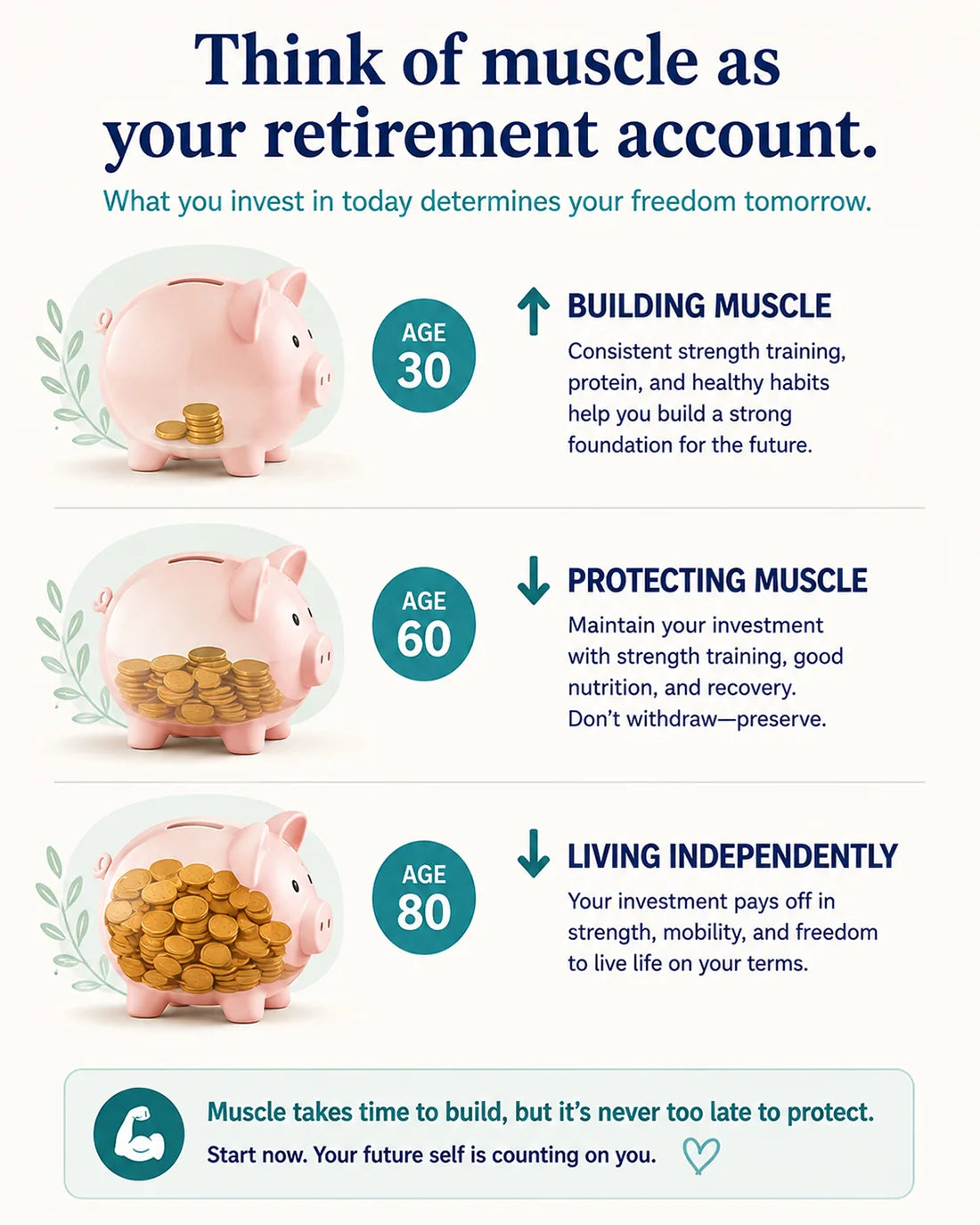
My Take as a Pharmacist
Modern medicine has given us extraordinary tools to transform metabolic health. GLP-1 medications, advanced nutrition science, and modern exercise physiology allow us to live longer, healthier lives than ever before.5,6,9
However, longevity without physical strength falls short of the goal. Truly healthy aging means preserving the physical abilities that allow us to enjoy those extra years.
When evaluating successful weight loss, I no longer ask: "How many pounds did you lose?"
I ask: "How much muscle did you keep?"
Because years down the road, your muscle mass will matter far more than your waistline.
Key Points to Remember
If you are aiming to lose weight while optimizing your long-term health:
- Prioritize protein at every single meal.3
- Perform resistance training at least 2 to 4 times per week.2,11
- Consider creatine monohydrate if appropriate for your goals.7,8
- Ensure adequate magnesium intake.
- Protect your sleep schedule.
- Avoid extreme, unsupervised crash diets.
If you are taking a GLP-1 medication, integrate muscle preservation into your care plan from day one.5,6,12 The scale measures what you've lost, but your strength reflects what you've saved. Preserving strength is one of the single best investments you can make in your long-term vitality.
📄 Free Printable
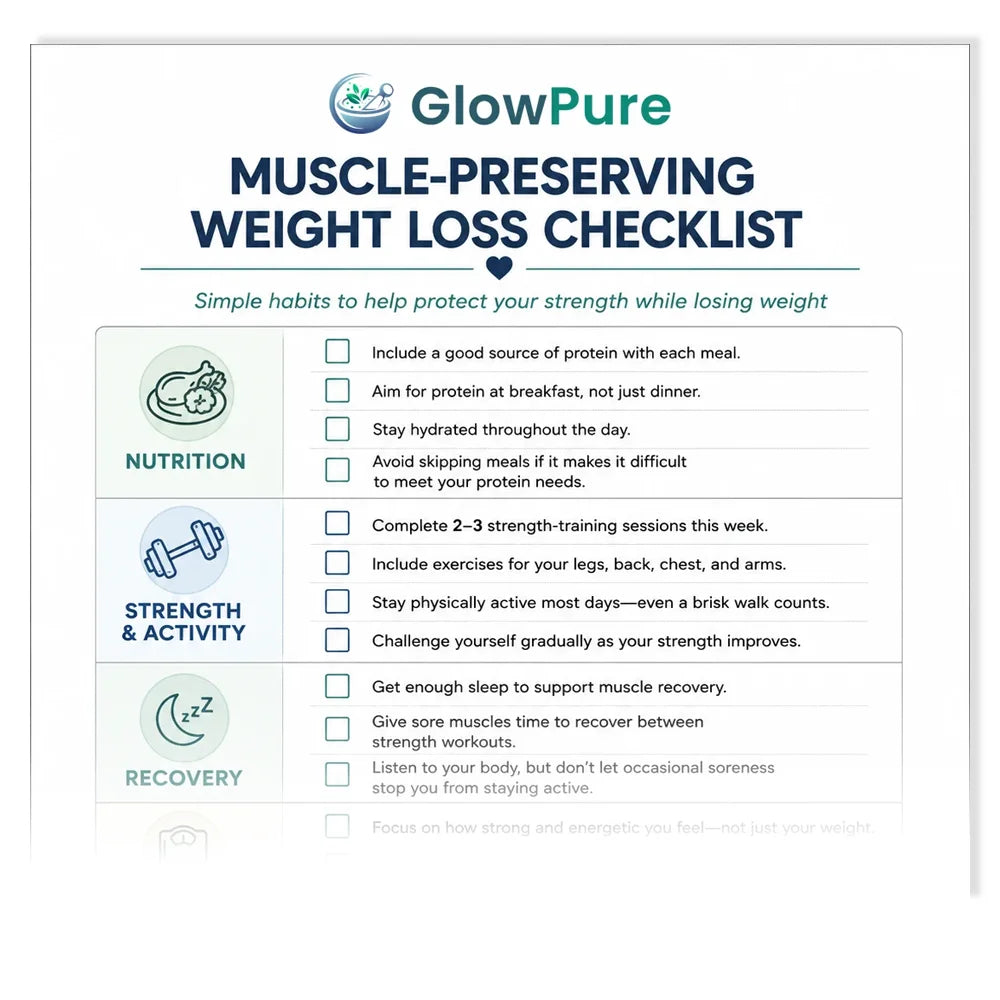
Muscle-Preserving Weight Loss Checklist
Putting healthy habits into practice is easier when you have a reminder. Download our free Muscle-Preserving Weight Loss Checklist to help you stay focused on protein, strength training, recovery, and healthy weight-loss habits.
⬇ Download the Printer-Friendly PDF
Be well,
Pharmacist Eddie

References
- Cruz-Jentoft AJ, et al. Sarcopenia: Revised European Consensus on Definition and Diagnosis. Age and Ageing. 2019.
- Morton RW, et al. Protein Supplementation and Resistance Training. British Journal of Sports Medicine. 2018.
- Phillips SM. Nutritional Strategies for Skeletal Muscle Maintenance. Applied Physiology, Nutrition, and Metabolism. 2016.
- Wolfe RR. The Role of Dietary Protein in Optimizing Muscle Mass. American Journal of Clinical Nutrition. 2017.
- Jastreboff AM, et al. Tirzepatide Once Weekly for Obesity. New England Journal of Medicine. 2022.
- Wilding JPH, et al. Once-Weekly Semaglutide in Adults with Overweight or Obesity. New England Journal of Medicine. 2021.
- Candow DG, et al. Creatine Supplementation for Healthy Aging. Nutrients. 2021.
- Kreider RB, et al. International Society of Sports Nutrition Position Stand: Creatine Supplementation. Journal of the International Society of Sports Nutrition. 2022.
- Volpi E, et al. Exercise, Protein, and Healthy Aging. Clinical Nutrition. 2013.
- National Institute on Aging. Exercise and Physical Activity Guide for Older Adults.
- American College of Sports Medicine. ACSM Position Stand on Resistance Exercise for Older Adults.
- Bauer J, et al. Evidence-Based Recommendations for Optimal Dietary Protein Intake in Older People. Journal of the American Medical Directors Association. 2013.
Continue Learning About Metabolic Health
- Protein: The Foundation of Muscle, Metabolism, and Healthy Aging
- Sarcopenia: Why We Lose Muscle as We Age
- When to Stop Losing Weight on GLP-1s
- The Science Behind Creatine Monohydrate: Benefits for Strength, Brain Health & Healthy Aging
- Does Creatine Damage Your Kidneys? A Pharmacist Explains the Evidence
← Explore the Healthy Aging Hub
The information in this article is provided for educational purposes only and is not intended as medical advice. Always consult your healthcare provider before starting any dietary supplement, especially if you have a medical condition, are pregnant or nursing, or take prescription medications.