
The Science Behind Creatine Monohydrate: Benefits for Strength, Brain Health & Healthy Aging
By Eddie Khoriaty, BPharm, R.Ph., C.Ph.
From the Weight Room to the Research Lab
Back in the early 1990s, when I was trying to push past my own lifting plateaus, a tub of creatine powder was a permanent fixture on my kitchen counter. Every morning, I'd add a 5-gram scoop to my protein shake before heading to the gym.
At the time, creatine was known almost exclusively as a supplement for athletes and bodybuilders. Over the past three decades, however, the science has expanded dramatically. Today, research suggests creatine supports much more than muscle performance, including healthy brain energy metabolism.
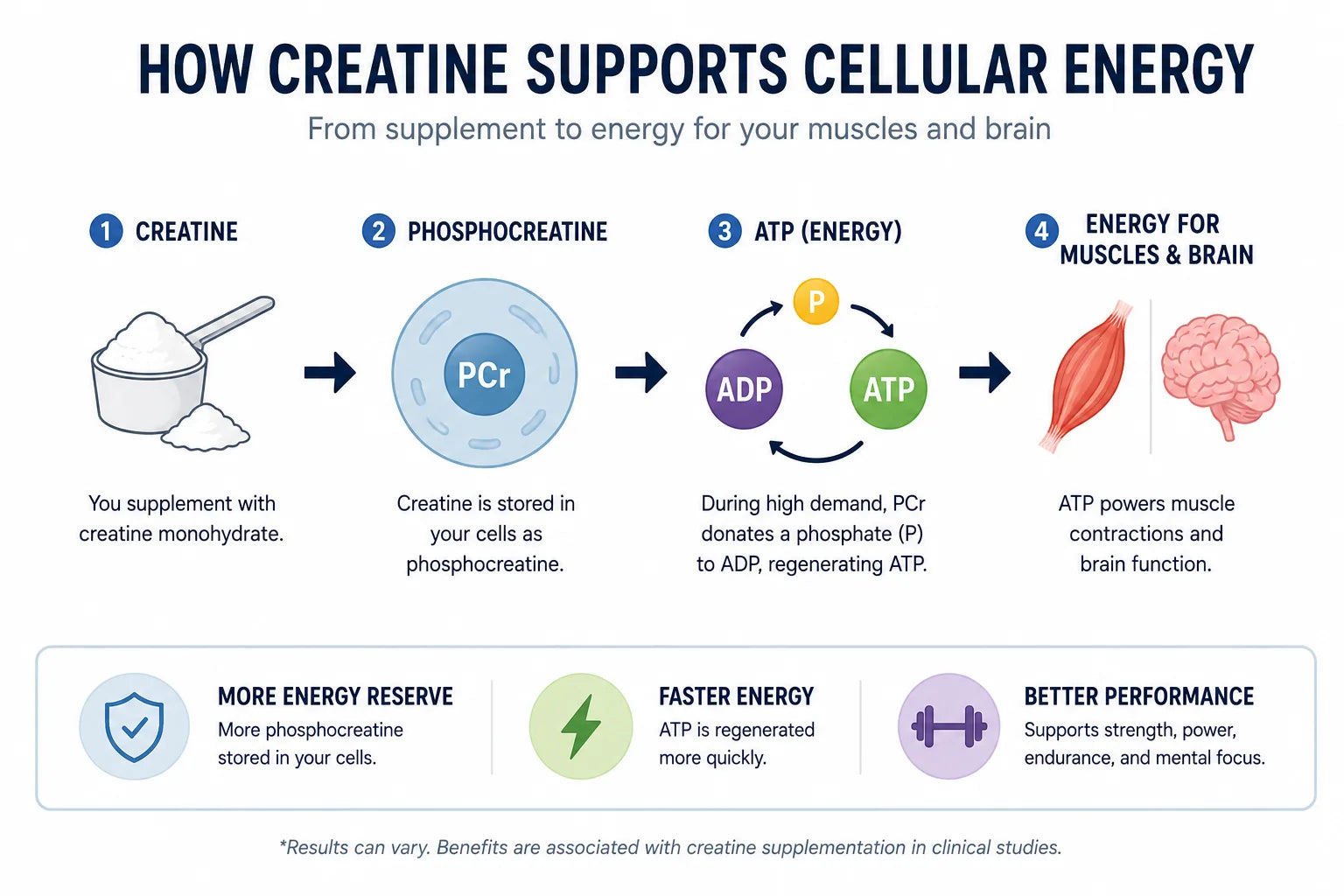
Creatine monohydrate is one of the most extensively studied dietary supplements available, with more than 1,000 published studies examining its safety and effectiveness. Its primary role is to help regenerate adenosine triphosphate (ATP), the molecule that provides energy for nearly every cell in your body. Because both your muscles and your brain have exceptionally high energy demands, maintaining adequate ATP production is essential for physical performance and cognitive function.
When you supplement with creatine monohydrate, your body stores more phosphocreatine inside cells. During intense physical activity, or even mentally demanding tasks, those phosphocreatine stores help rapidly regenerate ATP, allowing your cells to continue producing energy efficiently. This process has been associated with improvements in strength, power, muscular endurance, and mental performance in a variety of clinical studies. [1,2]
Who May Benefit from Creatine?
Creatine isn't just for athletes. Research suggests these groups may benefit from supplementation:
✔ Adults looking to maintain muscle strength as they age
✔ People who perform resistance training or high-intensity exercise
✔ Individuals seeking additional support for cognitive performance during mentally demanding tasks
✔ Older adults interested in supporting healthy aging
While creatine has long been associated with sports performance, growing evidence suggests its benefits extend well beyond the gym.
💡 Did You Know?
Although your brain accounts for only about 2% of your body weight, it consumes approximately 20% of your body's energy. That's one reason researchers have become increasingly interested in creatine's role in supporting healthy brain function.
Research suggests that increasing brain creatine stores may help support this high energy demand, particularly during periods of mental fatigue or sleep deprivation. Several clinical trials have reported improvements in measures such as working memory, short-term memory, and processing speed, especially during cognitively demanding tasks. [3,4]
Neuroprotection, Recovery & Healthy Aging
Because the brain has such high energy demands, researchers have explored whether creatine supplementation may support healthy brain function during periods of metabolic stress, sleep deprivation, and aging.
Several studies suggest that creatine may help reduce oxidative stress and support cellular energy production in the brain. Human clinical trials have also found that creatine supplementation may help maintain cognitive performance during short-term sleep deprivation, with improvements reported in measures such as memory, attention, and mental processing speed. Researchers continue to investigate its potential role in supporting long-term brain health and recovery following mild traumatic brain injury (mTBI). [4,5,6]
Muscle Recovery & Performance
Creatine doesn't simply help you perform better during exercise, it may also help your body recover afterward.
One way creatine works is by increasing the amount of water stored inside muscle cells, a process known as cellular hydration. This creates an environment that supports muscle protein synthesis and healthy muscle adaptation following resistance training. Research also suggests that creatine supplementation may help reduce exercise-induced muscle damage, support glycogen replenishment, and lessen post-workout soreness, allowing for improved recovery between training sessions. [1,7]
Together, these effects help explain why creatine monohydrate remains one of the most trusted supplements for supporting strength, recovery, and healthy aging.
The Science at a Glance
| Target Area | How It Works | Potential Benefits |
|---|---|---|
| 🧠 Brain Performance | Helps regenerate ATP, the brain's primary energy source | Supports memory, focus, and mental clarity |
| 🛡️ Brain Resilience | Supports cellular energy during metabolic stress and sleep deprivation | Helps maintain cognitive performance during periods of stress or poor sleep |
| 💪 Strength & Power | Rapidly regenerates ATP during high-intensity exercise | Increased strength, power, and exercise performance |
| 🏋️ Muscle Growth | Promotes cellular hydration and supports muscle protein synthesis | Supports lean muscle development when combined with resistance training |
| 🔄 Recovery | May reduce exercise-induced muscle damage and support glycogen replenishment | Less post-workout soreness and faster recovery between workouts |
Why Creatine Monohydrate?
Not all forms of creatine have been studied equally. While products containing creatine HCl, buffered creatine, and other specialty forms often claim superior absorption or performance, the overwhelming majority of clinical research has been conducted using creatine monohydrate.
In fact, creatine monohydrate has been evaluated in more than 1,000 scientific studies and remains the form recommended by organizations such as the International Society of Sports Nutrition for its safety, effectiveness, and extensive research record. It is highly bioavailable, well tolerated by most healthy adults, and consistently shown to increase muscle creatine stores when taken as directed. [1]
Wondering whether creating affects kidney health? Read our evidence-based guide to creatine and kidney function.
✅ Practical Tip
When comparing creatine supplements, look for 100% creatine monohydrate with no unnecessary fillers. It's the form used in the overwhelming majority of clinical research.

Put the Science Into Practice
New to creatine? This pharmacist-created resource explains how to take it consistently, what to expect, and answers common questions. It also includes a 30-day tracker to help you build a lasting routine.
Download the Free GuideFinal Thoughts
More than 30 years ago, I started taking creatine to support my workouts. Today, I continue taking it for a very different reason.
As a pharmacist, I've watched the science evolve from sports performance into healthy aging, muscle recovery, and cognitive support. Few supplements have accumulated the depth of evidence that creatine monohydrate has.
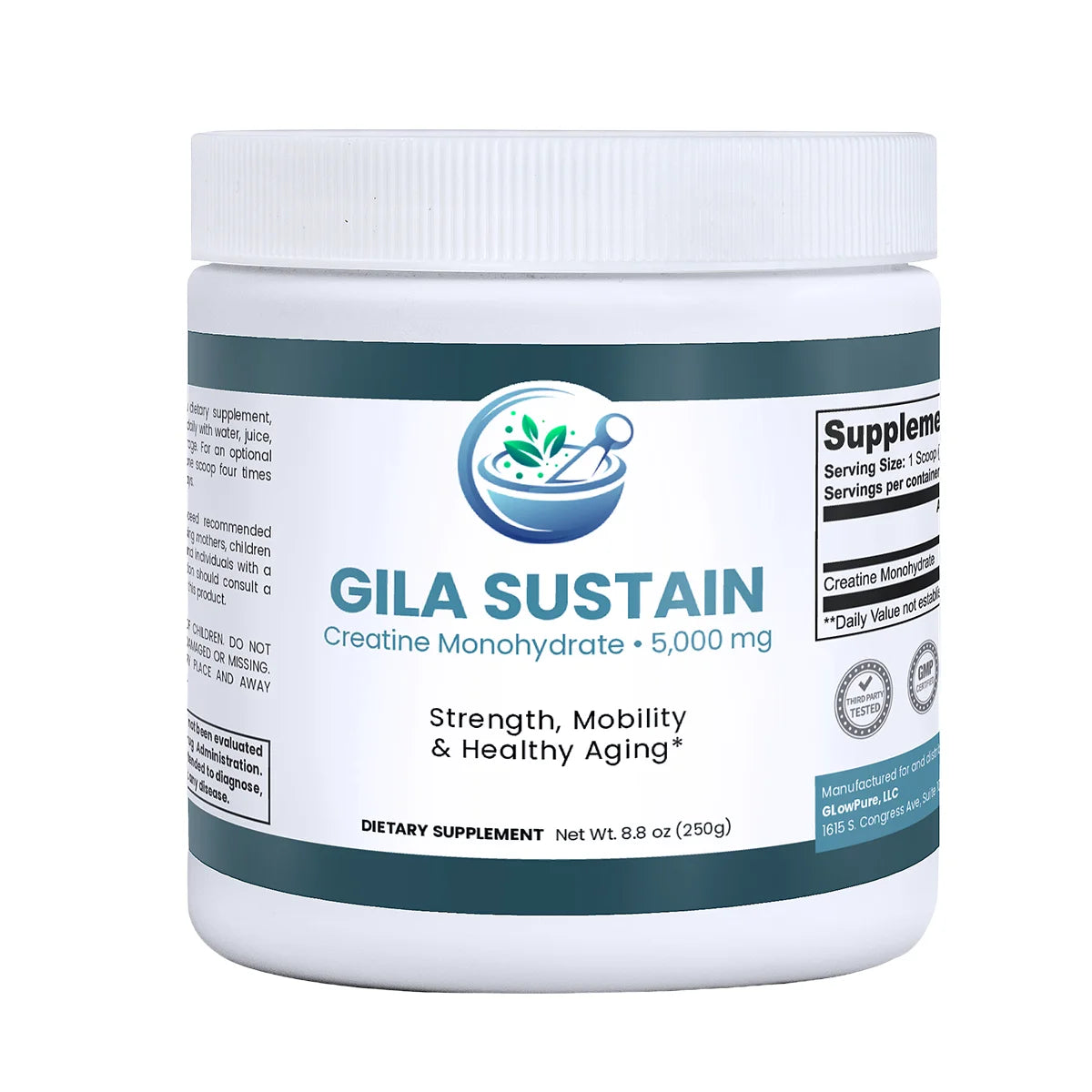
That's why it's still part of my own daily routine—and why I chose 100% creatine monohydrate as the foundation of GILA Sustain.
If you're looking for a simple, science-backed creatine without unnecessary ingredients, I'd invite you to take a closer look at GILA Sustain.
👉 Ready to support your muscles and brain with one of the world's most researched supplements?
Be well,
Pharmacist Eddie

Continue Learning About Healthy Aging
- Sarcopenia: Why We Lose Muscle as We Age
- Understanding Inflammaging: The Hidden Accelerator of Aging
- The Science of Longevity: What We Know Today About Living Longer
- Does Creatine Damage Your Kidneys? A Pharmacist Explains the Evidence
← Explore the Healthy Aging Hub
References
- Kreider RB, Kalman DS, Antonio J, et al. International Society of Sports Nutrition Position Stand: Safety and Efficacy of Creatine Supplementation in Exercise, Sport, and Medicine. Journal of the International Society of Sports Nutrition. 2017;14:18.
- Wallimann T, Tokarska-Schlattner M, Schlattner U. The Phosphocreatine Circuit: Molecular and Cellular Physiology of Creatine Kinase, Implications for Creatine Supplementation. Amino Acids. 2011;40(5):1271–1296.
- Rae C, Digney AL, McEwan SR, Bates TC. Oral Creatine Monohydrate Supplementation Improves Brain Performance: A Double-Blind, Placebo-Controlled, Cross-Over Trial. Proceedings of the Royal Society B: Biological Sciences. 2003;270(1529):2147–2150.
- Avgerinos KI, Spyrou N, Bougioukas KI, Kapogiannis D. Effects of Creatine Supplementation on Cognitive Function of Healthy Individuals: A Systematic Review of Randomized Controlled Trials. Experimental Gerontology. 2018;108:166–173.
- McMorris T, Harris RC, Swain J, et al. Effect of Creatine Supplementation and Sleep Deprivation, with Mild Exercise, on Cognitive and Psychomotor Performance. Neuropsychology, Development, and Cognition. 2006;13(1):11–15.
- Rawson ES, Venezia AC. Use of Creatine in the Elderly and Evidence for Effects on Cognitive Function in Young and Old. Amino Acids. 2011;40(5):1349–1362.
- Chilibeck PD, Kaviani M, Candow DG, Zello GA. Effect of Creatine Supplementation During Resistance Training on Lean Tissue Mass and Muscular Strength in Older Adults: A Meta-analysis. Open Access Journal of Sports Medicine. 2017;8:213–226.
The information in this article is provided for educational purposes only and is not intended as medical advice. Always consult your healthcare provider before starting any dietary supplement, especially if you have a medical condition, are pregnant or nursing, or take prescription medications.