
Does Ozempic Cause Hair Loss? A Pharmacist Explains
By Eddie Khoriaty, BPharm, R.Ph., C.Ph.
What we know about GLP-1 medications and hair shedding
“I started Ozempic, and now there’s hair in the shower drain. Is the medicine doing this?”
It’s a reasonable question. Losing hair can be alarming, especially when your blood sugar or weight is improving and you’re otherwise feeling good about your progress.
The answer isn’t a simple yes or no. Hair loss has been reported with GLP-1 treatments, but weight loss, eating less, and unrelated health conditions may also play a part. Noticing more hair in your brush doesn’t tell us which of those is responsible.
When someone asks me about shedding, I want to know when it started, how quickly their weight changed, and what they’ve been able to eat. I also want to know about other medicines or health changes. Those details help us work out what deserves a closer look.
Key Takeaways
- Hair loss has been reported with GLP-1 treatments. A 2026 study found an increased rate of diagnosed hair loss among adults with type 2 diabetes, but the absolute risk was low.
- Weight loss and reduced food intake may contribute to temporary shedding. The research does not establish one cause for every case.
- Shedding can become noticeable a few months after a trigger. Improvement and visible regrowth take time.
- Prioritize adequate protein and balanced meals. Ask your clinician whether checking iron stores, thyroid function, or other possible contributors makes sense for you.
- Some symptoms deserve an evaluation. These include patchy loss, scalp inflammation, very heavy shedding, or persistent symptoms.
What do we know about GLP-1 medications and hair loss?
Hair loss is not listed among the common side effects in Ozempic’s diabetes trials. It is, however, reported in the weight-management trials for Wegovy and Zepbound. That distinction matters when you’re reading headlines about “Ozempic hair loss.”
Ozempic and Wegovy contain the same active ingredient, semaglutide. Mounjaro and Zepbound contain tirzepatide. But their doses and the people enrolled in their trials differ, so a hair-loss percentage from one product shouldn’t be applied to all of them.
In Zepbound’s weight-reduction trials, hair loss was reported in about 4% to 5% of participants taking the medicine, compared with 1% taking a placebo. The prescribing information notes that these reports were associated with weight reduction.
Newer research has also found an association between GLP-1 use and diagnosed hair loss. That gives us a reason to take the concern seriously, but it doesn’t establish that the medicine directly damages hair follicles, or tell us what will happen to any one person.
What the new 2026 BMJ study found
Researchers used health records to compare adults with type 2 diabetes who started a GLP-1 receptor agonist with those who started two other classes of diabetes medicine: SGLT-2 inhibitors and DPP-4 inhibitors.
One comparison included 12,004 GLP-1 users and 15,221 SGLT-2 inhibitor users. The other included 11,964 GLP-1 users and 11,238 DPP-4 inhibitor users. These were separate comparisons, with some people potentially represented in both, so the numbers shouldn’t be added together as though everyone was a different participant. [1]
After statistical adjustment, the relative rate of diagnosed alopecia (the medical term for hair loss), was 37% higher than with SGLT-2 inhibitors and 68% higher than with DPP-4 inhibitors. The increase was seen in nonscarring alopecia, a category in which the hair follicles are not permanently destroyed by scarring. [1]
A percentage increase sounds large when read alone, but diagnosed hair loss was uncommon. “37% higher” does not mean that 37 out of every 100 GLP-1 users lost their hair. It describes the difference relative to the comparison group. The study’s authors described the absolute risk as low. [1]
This was an observational study of adults with type 2 diabetes. Even careful statistical adjustment cannot remove every difference between treatment groups. The findings do not prove a direct drug effect, explain the mechanism, or give a precise risk for someone taking a higher-dose product solely for weight management.
As a pharmacist, I would not dismiss a patient who notices increased shedding, and I certainly would not tell them the medicine must be stopped based on this study alone. It gives us another reason to take the concern seriously and look into what may be contributing.
Why hair shedding can happen
Telogen effluvium is diffuse hair shedding that follows a physical or emotional stress. More hairs than usual move from the growing phase into a resting phase, and those hairs fall out later. That delay explains why shedding can become noticeable a few months after the stressful period rather than during it.
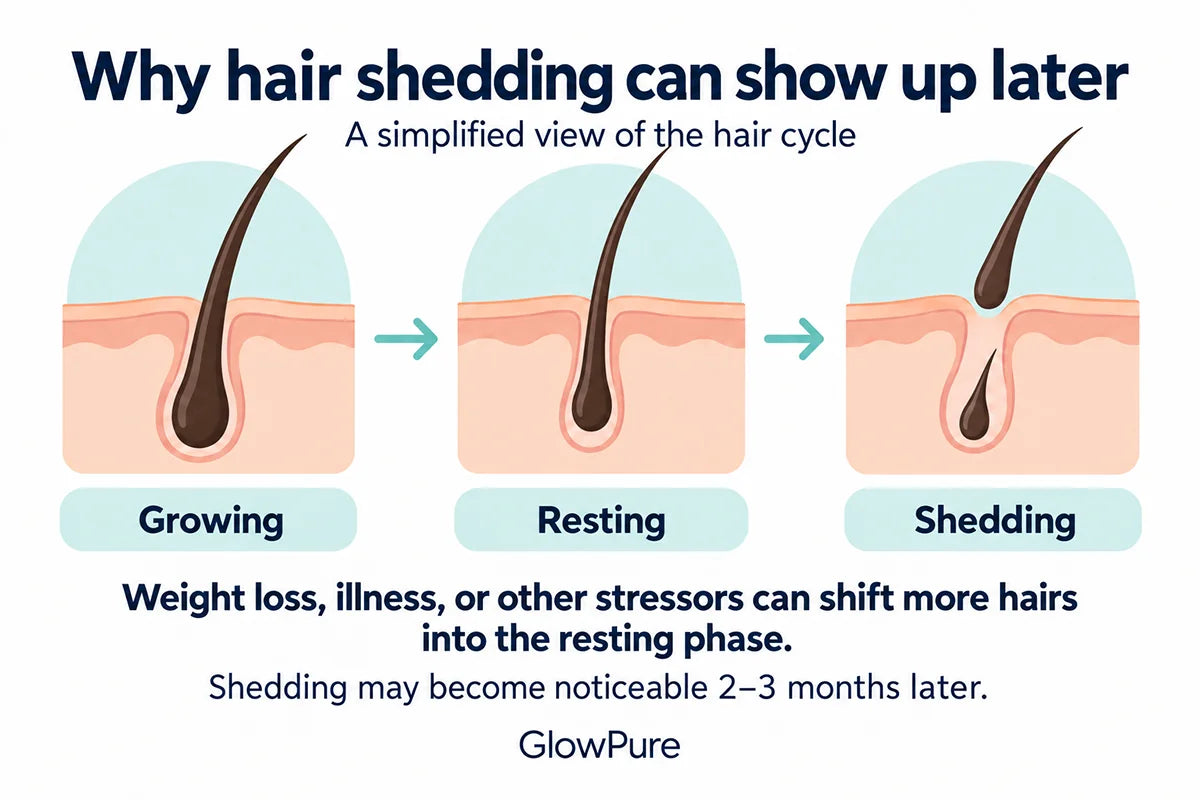 Substantial weight loss is one possible trigger. A smaller appetite can also make it harder to eat enough protein and calories or get enough iron and other nutrients. These are possible explanations for shedding during GLP-1 treatment, but the BMJ study did not determine how much each factor contributed. [1]
There are other possibilities, too. Thyroid disease, low iron stores, illness, medication changes, and hormonal shifts can cause similar complaints. Sometimes diffuse shedding makes underlying pattern hair loss more noticeable. More than one cause may be involved. [3, 5]
For women who are still menstruating, including during perimenopause, blood loss may contribute to low iron stores. A receding hairline or thinning at the crown may suggest pattern hair loss, while a widening part is another common clue. These details help your clinician distinguish between possible causes.
The current evidence does not establish a simple women-versus-men rule for hair shedding with GLP-1 medicines. In Zepbound trials, however, hair loss was reported more frequently among women than men in both the treatment and placebo groups. [4]
When does shedding start, and will my hair grow back?
With telogen effluvium, shedding commonly becomes noticeable about two to three months after the trigger. Someone may have been taking a GLP-1 medicine for several months before noticing more hair in the shower or connecting the two events.
Once the trigger settles, shedding often improves over several months. Many cases of acute telogen effluvium resolve within roughly six months. Hair density can take longer to look normal because the new hairs need time to grow long enough for you to see a difference.
Telogen effluvium is usually temporary, but that reassurance depends on getting the diagnosis right. Persistent thinning, a widening part, a receding hairline, or bald patches may point to another condition—or to more than one condition happening at the same time.
Stopping a medicine does not automatically correct a nutritional deficiency or treat pattern hair loss. Before making any dose changes, discuss the timing of your symptoms and the benefits of your treatment with your prescriber.
What can help while taking a GLP-1?
Eat protein regularly. If a large meal is unappealing, try smaller meals and snacks that include protein. A dietitian can help you set an individual goal, especially if you have kidney disease or other dietary restrictions. Getting enough protein also matters for maintaining muscle during weight loss. Learn more about sarcopenia and why we lose muscle as we age.
Follow the prescribed dose schedule. Tell your prescriber if nausea, vomiting, or early fullness is keeping you from eating enough. There is no proven “hair-safe” GLP-1 dosing schedule, but you should avoid increasing doses faster than prescribed.
Have significant shedding evaluated. Depending on your symptoms and history, your clinician may consider a complete blood count, ferritin and other iron studies, thyroid tests, or selected nutrient tests. Vitamin D or zinc testing is not necessary for everyone.
Treat your hair gently. Avoid hairstyles that pull tightly on your scalp, and limit harsh chemical or heat treatments while shedding is active. These steps can reduce breakage, but they won’t stop the underlying shedding process overnight.
Discuss treatment when needed. A dermatologist may recommend topical minoxidil for pattern hair loss or persistent shedding. Oral minoxidil requires a prescription and monitoring. The right choice depends on the diagnosis, pregnancy considerations, and your medical history.
Keep supplements in perspective. No supplement reverses telogen effluvium overnight. Correcting a documented deficiency or filling a genuine dietary gap makes sense, but extra biotin has not been shown to prevent GLP-1-related shedding in people who already get enough.
If you use GILA Renew for nutritional support, consider it an addition to adequate food intake and appropriate clinical evaluation, not a treatment for hair loss.
High-dose biotin can also interfere with certain blood tests, including some thyroid tests and cardiac troponin tests. Tell your clinician and the laboratory exactly what you take. Follow their test-specific advice about whether to pause it and for how long; there is no single hold time that applies to every test. [6]
When to call your clinician
Some patterns of hair loss deserve a closer look. Contact your clinician if you notice:
- Circular or patchy bald spots, or scalp pain, redness, scaling, or signs of scarring.
- Very heavy shedding, continued worsening, or shedding lasting about six months or longer.
- Fatigue, feeling unusually cold, shortness of breath, or other symptoms that could suggest anemia or thyroid disease.
Let your prescriber know sooner if you’re struggling to eat enough. Repeated vomiting or trouble keeping fluids down needs prompt medical advice rather than waiting to see whether your hair improves.
The Bottom Line from a Pharmacist
Hair shedding during GLP-1 treatment deserves to be taken seriously, but it does not mean it will happen to you or that you will go bald. Weight change and reduced nutritional intake may explain some cases, while newer research leaves questions about other possible causes.
Temporary shedding often improves, though it takes time and patience. Tell your prescriber what you’re noticing, especially if the loss is patchy, worsening, or persistent. Understanding the cause is the best place to start before deciding whether to change a treatment that is helping you.
Be well,
~ Pharmacist Eddie
Frequently Asked Questions About GLP-1s and Hair Loss
Does Mounjaro or Zepbound cause hair loss too?
Hair loss was reported in Zepbound’s weight-reduction trials. Mounjaro contains the same active ingredient, tirzepatide, but the doses and trial populations differ. A hair-loss rate from Zepbound’s trials should not be assumed to apply to Mounjaro. [4]
Does Wegovy cause more hair loss than Ozempic?
Wegovy’s weight-management trials reported hair loss, while Ozempic’s diabetes trial label does not list it among the common adverse reactions. These were not head-to-head trials designed to compare hair loss, so they do not establish that one product causes more shedding than the other. [2]
Should I stop Ozempic if my hair is falling out?
Speak with your prescriber before stopping or changing your dose. The pattern and timing of the shedding, your food intake, and the benefits of treatment all matter. Another cause may also need attention.
Does microdosing prevent hair loss?
There is no good clinical evidence that an unapproved microdosing strategy prevents hair shedding. Follow your prescribed dosing plan, and discuss side effects or difficulty eating enough with your prescriber.
Can biotin prevent hair loss?
Biotin supplementation can help when there is a true deficiency, which is uncommon. High doses have not been shown to prevent GLP-1-related shedding in people who already get enough biotin. They can also interfere with certain blood tests, so tell your clinician and laboratory what you take. [6]
Is hair loss during GLP-1 treatment permanent?
Shedding caused by telogen effluvium is often temporary. Regrowth is less predictable when pattern hair loss, a scarring condition, or an untreated medical problem is also involved. Patchy, worsening, or persistent hair loss deserves an evaluation.

Continue Learning About GLP-1s
- What Are GLP-1 Medications? A Pharmacist's Guide
- When to Stop Lowing Weight on GLP-1s
- Taking a GLP-1? Here Are 5 Side Effects Nobody Warned You About
← Explore the GLP-1 Resource Center
Sources and References
- Tang H, et al. Risk of hair loss associated with glucagon-like peptide-1 receptor agonists in adults with type 2 diabetes: target trial emulation. BMJ. 2026;394:e100077. View study .
- Novo Nordisk. Ozempic and Wegovy prescribing information. Ozempic prescribing information ; Wegovy prescribing information .
- Alopecia as an Emerging Adverse Effect Associated With Glucagon-Like Peptide-1 (GLP-1) Receptor Agonists for Weight Loss: A Scoping Review. Cureus. 2025;17(8):e90021. Read review .
- Eli Lilly and Company. Zepbound prescribing information. View prescribing information .
- Branyiczky MK, et al. Effects of GLP-1 Receptor Agonists on Hair Loss and Regrowth: A Systematic Review. International Journal of Dermatology. 2026;65(5):1030–1032. View review .
- U.S. Food and Drug Administration. Biotin Interference with Troponin Lab Tests—Assays Subject to Biotin Interference. Read FDA information .
The information in this article is provided for educational purposes only and is not intended as medical advice. Always consult your healthcare provider before starting any dietary supplement, especially if you have a medical condition, are pregnant or nursing, or take prescription medications.